Employee Spotlight: Ron Batac
5 Minute Read
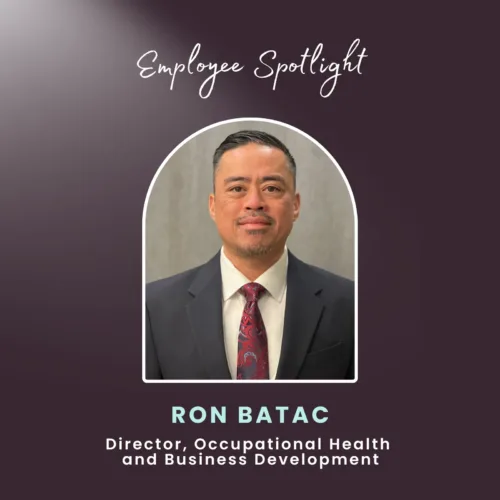
Ron Batac, Director of Occupational Health and Business Development Lead
Meet Ron Batac. As the Director of Occupational Health and Business Development Lead, he leads the growth of Kii Health’s occupational health services nationally and works closely with employers to design programs that actually function in real workplaces, not just on paper.
In his role, Ron spends a lot of time with organizations’ HR, operations, safety teams, and senior leadership, helping them translate workforce challenges into practical solutions, including everything from WSIB and disability management programs to nurse-led/nurse practitioner models, medical and functional assessments, ergonomic services, and employer reporting that supports better decisions. His favourite part of the job? It would have to be building programs that are clinically sound but also realistic to operate at scale, especially for large and complex organizations.
1. How does occupational health fit in as part of an organization’s broader employee well-being strategy?
Occupational health is often the part of well-being that gets overlooked, but it is the foundation. Wellness programs are important, but without strong occupational health systems, organizations end up reacting to injuries and absences instead of preventing them. When done well, occupational health supports employees from onboarding through to long-term sustainability at work.
I strongly believe that building a healthier workforce starts with understanding workplace culture and identifying the gaps that hold people and organizations back. This is where occupational health creates the most value by shaping how programs are designed, how early support is provided, and how consistently employees are cared for.
In many of the organizations I work with, occupational health becomes the link between HR, safety, benefits, and operations, helping everyone work from the same playbook.
2. What are some of the most common misconceptions you see when organizations think about occupational health?
A big misconception is that occupational health only matters after someone gets hurt. In reality, the biggest impact happens before that point.
Another misconception is that it is just a cost. The truth is that the right programs actually end up reducing claim duration, overtime, turnover, and disruption.
I also see organizations underestimate how much design matters. Two companies can spend similar amounts and get very different results depending on how quickly employees are seen, how assessments are structured, and how information flows back to decision makers.
3. From your experience, what impact can early intervention and preventive occupational health support have on employees and organizations?
Early intervention changes everything. Through ergonomic programs, functional evaluations, nurse triage, and rapid access to assessments, we have helped organizations reduce lost-time claims and shorten disability durations.
For employees, it builds trust and removes a lot of uncertainty. For employers, it creates predictability and better planning. Even small improvements at scale can make a meaningful difference.
4. What does a truly comprehensive occupational health program look like in practice?
A strong program is integrated and simple to use, even if the infrastructure behind it is complex. In practice, this usually includes clear job demand standards, centralized intake and triage, access to functional and ergonomic assessments, occupational physician oversight, coordination with WSIB and disability teams, and the ability to deliver services on-site or through mobile clinics when needed. The most effective programs feel seamless to employees and provide employers with consistent, reliable data they can act on.
5. What trends are you seeing in occupational health right now, and how should employers be preparing for what’s ahead?
Employers are asking for more integration, faster access to care, and better visibility into what is actually happening across their workforce. Many are also navigating the complexities of return-to-office policies, where inconsistent readiness, unresolved medical limitations, and employee anxiety can quickly translate into friction, absenteeism, or performance issues. Occupational health plays a critical role in supporting safe and sustainable transitions by aligning medical guidance with operational needs and employee expectations.
There is also a growing focus on how mental health fits within occupational health, especially in physically demanding or high-risk environments. Organizations that are investing in scalable service models and stronger data infrastructure now will be in a much stronger position over the next few years.
6. Looking ahead, where do you see the greatest opportunities for growth or innovation in the occupational health space?
There is a lot of opportunity in how services are delivered and how information is used. Nurse-led programs, functional data to support job design, and mobile testing platforms are all areas where we have seen meaningful progress. Occupational health has the potential to become a true strategic input into workforce planning rather than just a support function.
7. How do you think workplace needs are evolving when it comes to health and wellness support?
Workforces are more distributed, roles are more demanding, and expectations around support are higher. Employees want quick access to care and clear, fair processes. Employers want programs that scale and deliver measurable results. The future of occupational health will be about building systems that support resilience, productivity, and long-term sustainability, not just compliance.