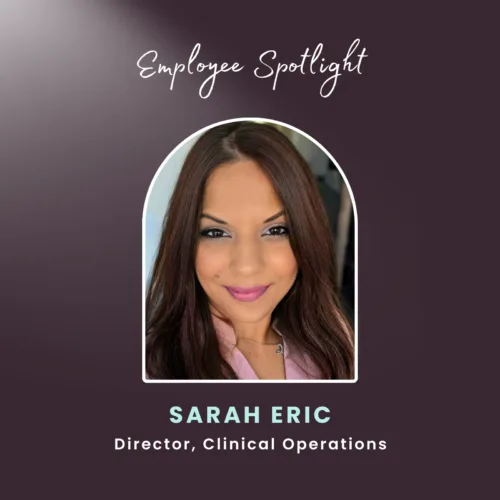
Employee Spotlight: Sarah Eric
5 Minute Read
Sarah Eric, Director of Clinical Operations
Meet Sarah Eric. As the Director of Clinical Operations at Kii Health, she oversees the delivery of integrated health services that support our clients’ employees across mental, physical, and occupational health. Her role ensures seamless collaboration across multidisciplinary clinical teams to deliver high-quality, evidence-based care tailored to the unique needs of each individual. Sarah oversees operational performance, compliance, quality assurance, and continuous improvement initiatives to optimize service delivery and enhance health outcomes. By leveraging data-driven insights and innovative care models, she works to create a proactive, supportive environment that empowers employees to thrive both professionally and personally.
1. How do your clinical teams work together behind the scenes to ensure that employees receive the right care at the right time?
The teams operate as a unified network. We use shared care plans, regular case reviews, and real-time communication to coordinate across disciplines, whether it’s mental health counseling, medical assessments, or medical second opinion. This approach ensures employees receive the right level of support without delays or gaps in care.
2. Why is a holistic, integrated approach so essential for supporting employees effectively?
Health challenges rarely exist in isolation. Mental health can impact physical recovery, and workplace stress can influence both. By integrating services, we address the full picture, helping employees manage interconnected issues and preventing small concerns from becoming major obstacles. This leads to better outcomes and a more sustainable return to wellness.
3. How does having navigation embedded into your clinical operations change the experience and outcomes for employees?
Navigation acts as a guide through what can often feel like a complex healthcare journey. By embedding navigation into our operations, employees have a single point of contact who helps them access the right resources quickly. This reduces confusion, shortens wait times, and improves adherence to care plans, ultimately leading to faster recovery and better engagement.
4. What do employers often overlook when it comes to supporting their teams?
Many organizations underestimate the impact of early intervention and proactive support. Waiting until an issue becomes critical often leads to longer absences and higher costs. Employers also sometimes overlook the importance of psychological safety and workplace flexibility, which are key to preventing burnout and fostering resilience.
5. Which areas are you seeing the greatest growth or demand in right now, and why?
We’re seeing significant growth in mental health services, particularly counseling and coaching. Rising workplace stress, increased awareness, and reduced stigma have driven demand. Additionally, return-to-work planning is gaining traction as organizations recognize the need for structured, supportive reintegration after health-related absences.
6. Can you share an example of how an integrated approach changed an employee’s health journey
Let’s consider a case that involves an employee struggling with both physical pain and anxiety after an injury. Through our integrated model, we would combine navigational support for resources like physiotherapy, mental health counseling, and referral to alternative services. This holistic approach will not only accelerate physical recovery but also improve confidence and reduced anxiety, allowing the employee to return to work successfully and sustainably.
7. How do you think workplace needs are evolving when it comes to health and wellness support?
Workplaces are moving toward more personalized, flexible solutions. Employees expect support that goes beyond traditional benefits, such as services that address mental health, work-life balance, and preventive care. Employers are recognizing that health and wellness are strategic priorities, not just perks, and that integrated care models are essential for long-term workforce health.